

Why the Steel Heat Treating Process Matters
Updated: Feb 25
When it comes to knives and tools that need to perform under pressure, toughness and reliability are non-negotiable. Ever wonder what makes a knife blade hold its edge through tough use or resist breaking when the going gets rough? The secret lies in the steel heat treating process. This process transforms ordinary steel into a powerhouse of strength, durability, and precision. Let me take you through why heat treating steel is a game-changer and how it impacts the tools you rely on every day.
We go the extra mile!
At its core, the steel heat treating process is all about controlling the temperature of steel to change its physical and mechanical properties. Sounds simple, right? But the science behind it is fascinating and crucial.
Steel is an alloy primarily made of iron and carbon. When heated to specific temperatures and cooled at controlled rates, the internal structure of steel changes. This affects hardness, toughness, flexibility, and wear resistance. Without heat treating, steel would be too soft or brittle for demanding tasks.
Here’s a quick breakdown of the main steps involved:
Our knives are scientifically heat treated and TRUE DEEP cryogenically quenched at Peters' Heat Treat Inc. Blade Division.
You may wonder why we don't cut corners and go the extra mile having them professionally heat treated----This is why.
Peters' heats the steel in vacuum furnaces which increases the amount of martensite in the steel's crystal structure,
increasing it's strength 200-300% more than steel simply quenched in oil or dry ice. The steel is then cooled with evaporated liquid nitrogen at controlled temperatures as low as -317 degrees farenheit. This process imparts very high wear resistance. Peters' not only specializes in knife steel, they also specialize in other applications as well, such as......
- Aerospace components
- Nuclear valves
- Defense
-Firearms, and other essential industrial applications.
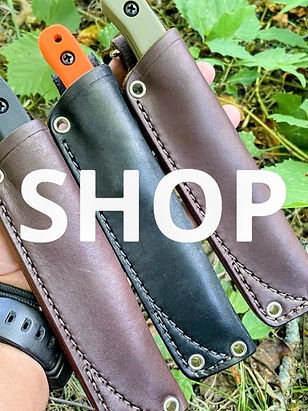
Our knives are tools built to be used and are currently being used by Military, Veterans, Firefighters, Law Enforcement, adventurers , and modern pioneers. Our commitment to domestic craftsmanship ensures that every knife meets exacting standards for performance. The FreeBird comes with a premium leather sheath in black or brown, completing a package designed for collectors, enthusiasts, and serious users alike
Each step is carefully controlled to achieve the perfect balance of properties for the intended use.

FreeBird 🦅🇺🇸
Why Does Heat Treating Steel Matter So Much?
You might ask, “Why go through all this trouble? Can’t we just use steel as it is?” The answer is a resounding no! Untreated steel is simply not up to the task for high-performance knives and tools.
Here’s why heat treating is essential:
Hardness: Heat treating increases the hardness of steel, allowing blades to hold a sharp edge longer. Imagine a knife that dulls after a few cuts - frustrating, right? Heat treatment prevents that.
Toughness: It also improves toughness, meaning the steel can absorb shocks and impacts without cracking or chipping.
Wear Resistance: Heat-treated steel resists wear and abrasion, extending the life of your tools.
Corrosion Resistance: Some heat treatments can enhance resistance to rust and corrosion, critical for tools exposed to harsh environments.
Flexibility: Proper tempering ensures the steel isn’t too brittle, so it can flex slightly without breaking.
In short, heat treating turns steel into a finely tuned material that performs exactly as needed.
The Science Behind Heat Treating Knife Steel
If you’re serious about knives, you’ve probably heard the phrase heat treating knife steel. This process is especially important for knife blades because they need a razor-sharp edge that lasts but also enough toughness to withstand heavy use.
Let’s dive a bit deeper into what happens inside the steel during heat treatment:
When heated, the steel’s crystal structure changes from ferrite and pearlite to austenite.
Quenching rapidly cools the steel, transforming austenite into martensite, a very hard but brittle phase.
Tempering then allows some martensite to convert into tempered martensite, which balances hardness and toughness.
This delicate dance of phases is what gives knife steel its legendary performance. Without it, you’d have a blade that either chips easily or won’t hold an edge.
Practical Tips for Heat Treating Steel at Home or in the Workshop
Now, you might be thinking, “Can I do this myself?” You could but the blade will be exponentially less reliable!

Inferior heat treating Impacts Knife Performance in the Field!
For those who depend on knives in demanding situations - whether in the outdoors, tactical, survival, or rescue scenarios - the steel heat treating process is the difference between success and failure.
Here’s how it translates to real-world performance:
Edge retention: A properly heat-treated blade stays sharp longer, reducing the need for frequent sharpening.
Durability: Heat-treated steel resists chipping and breaking when cutting tough materials or prying.
Corrosion resistance: Treated steel can better withstand moisture and harsh environments, crucial for outdoor use.
Ease of maintenance: A blade that holds its edge and resists rust is easier to maintain, saving time and effort.
When you’re out in the field, the last thing you want is a knife that fails. Proper true deep cryogenic/ Heat treating ensures your tool is ready for anything.
Advances in metallurgy and heat treating technology continue to push the boundaries of what steel can do. Methods like true cryogenic treatment and vacuum heat treating offer even greater control over steel properties.
For knife makers and users who demand the best, staying informed about these innovations is key. The steel heat treating process isn’t just a step in manufacturing - it’s an art and science that defines the quality of every blade.
If you want knives that stand up to the toughest challenges, the Chuck Richards Knives FreeBird is it!
Heat treating steel is more than just a manufacturing step - it’s the foundation of performance, durability, and reliability in knives and tools. Whether you’re sharpening your skills in the workshop or choosing your next blade, remember that the steel heat treating process is what makes all the difference. It’s the secret behind every tough, high-performance knife that professionals trust.


Comments